The gap between good and great leadership is intention. This course closes that gap, one shift at a time.
"Kirun is one of the most engaging facilitators I've ever encountered. He has a rare ability to ask pointy questions that nudge you to see your own thinking differently."Sabine · LVMH
"Kirun is a master communicator and crowd puller. He's so knowledgeable and is able to pull from a variety of sources to engage a senior leadership audience, which is no mean feat. Honestly one of the best programs I've ever attended."Saliya · Qatar Airways
"Genuinely changed how I think about my leadership. And I thought I already had that figured out. Building your leadership metacognition is really hard, but is the key meta skill all leaders should cultivate."Hana · Saudi Aramco
"After more than a decade teaching leadership, one thing has become clear: the magic most leaders are looking for is in the difficult conversation they’re avoiding — with themselves."
Kirun fuses cognitive science and real-world leadership frameworks — and makes it immediately practical. This is the thinking you’ll develop inside the cohort.
I asked 120 leaders the same questions over 18 months.
Different industries. Different continents. Different levels of the org chart.
I was curious:
These conversations interrogations highlighted, within minutes, who had actually worked on their leadership. Those who hadn't spoke in vague generalisations. Those who had dived into the specifics.
They'd taken a bird's eye view of their own leadership. They'd thought about their thinking — not just what they were doing, but how and why.
And I had a hunch as to what the secret ingredient was. But I wanted to make sure.
So, at the end of every conversation, I'd ask what I thought was a throwaway question:
"What leadership tools would you pass on to someone else?"
More than 90% of these leaders, even the ones who oozed competence, couldn't give me a specific answer.
I heard behaviours like "listening". Traits like "curiosity". Principles they'd read somewhere. But not tools. Barely any of them could articulate the specific tools they actually used in their leadership — even when they were clearly working.
That's when it clicked.
They knew how to lead. They just couldn't see how they were doing it. The tools were there — they just hadn't been named, examined, or made conscious.
That's not a knowledge gap. That's a metacognitive gap.
Intentional leadership requires you to flex your metacognition — the skill to think about your thinking. Not as a one-off concept, but as a consistent, conscious practice.
And the ultimate sign that you're doing it? You know what tools you have. You know when to use them. You know what's missing.
The problem is, most leaders never get the chance to practice it.
You're firefighting. Hitting targets. Managing up, managing sideways, managing the gap between what was promised and what's actually possible. Working on your leadership — really working on it — keeps getting pushed to a quarter that never comes. You're reactive.
And reactive leaders don't choose their direction. They just keep moving.
Like driving without street signs or GPS. You'll get somewhere. But you've got no idea where.
This course is that chance. Where you stop running the race and actually look at how you're running it. You’ll finally have the space to work on your leadership, rather than be consumed by it.
Most leadership courses assume you're already in the right quadrant. This one starts by finding out where you actually are. Which one is you?
Metacognition is how you see yourself and your team clearly — warts and all — and course correct intentionally. It’s your leadership radar for problems, opportunities, and what’s required to get to where you (and your team) want to be.
Metacognition enables intentional leadership. It helps you see your leadership clearly. Because without it, you won’t know if you’re going in the right direction until you’ve gone too far to course correct.
To drive your leadership, you need these two things:
Armed with this, everything changes. Which we’ll hone together in the course.
The ultimate sign of an intentional leader: they know exactly what tools they have, when to use them, and why.
| Before | After | |
|---|---|---|
| Reacting to problems as they surface | → | Scanning for problems before they escalate |
| Borrowing other leaders' frameworks | → | Knowing exactly which tools you need and why |
| Leading on autopilot | → | Leading with intention |
| Unconscious competence | → | Conscious competence |
| Busy but directionless | → | Executing with clarity and purpose |
| Can't answer "what's in your toolkit?" | → | You can, and it's genuinely yours |
I feel like I'm actually driving. I've got the brake, the accelerator. I can see where I'm going. I'm not just being reactive anymore — I'm making myself better.
Leadership development programs often smash you with content and hope it sticks. This is different, promise. Every session is a directed thinking process — one that surfaces what you actually believe, what tools you already have, and what you've been working around without realising it.
Before you can be intentional about anything, you need to understand how you're thinking in the first place. These two sessions build the foundation everything else runs on.
With the infrastructure in place, you now turn the radar on each critical domain of your leadership. Not theory — a metacognitive lens applied to the areas where intentional leadership either shows up or doesn't.
* Payments are processed and receipted under Braintools Pte. Ltd. — the company behind The Intentional Leader. You may see this name on your bank statement or payment confirmation.
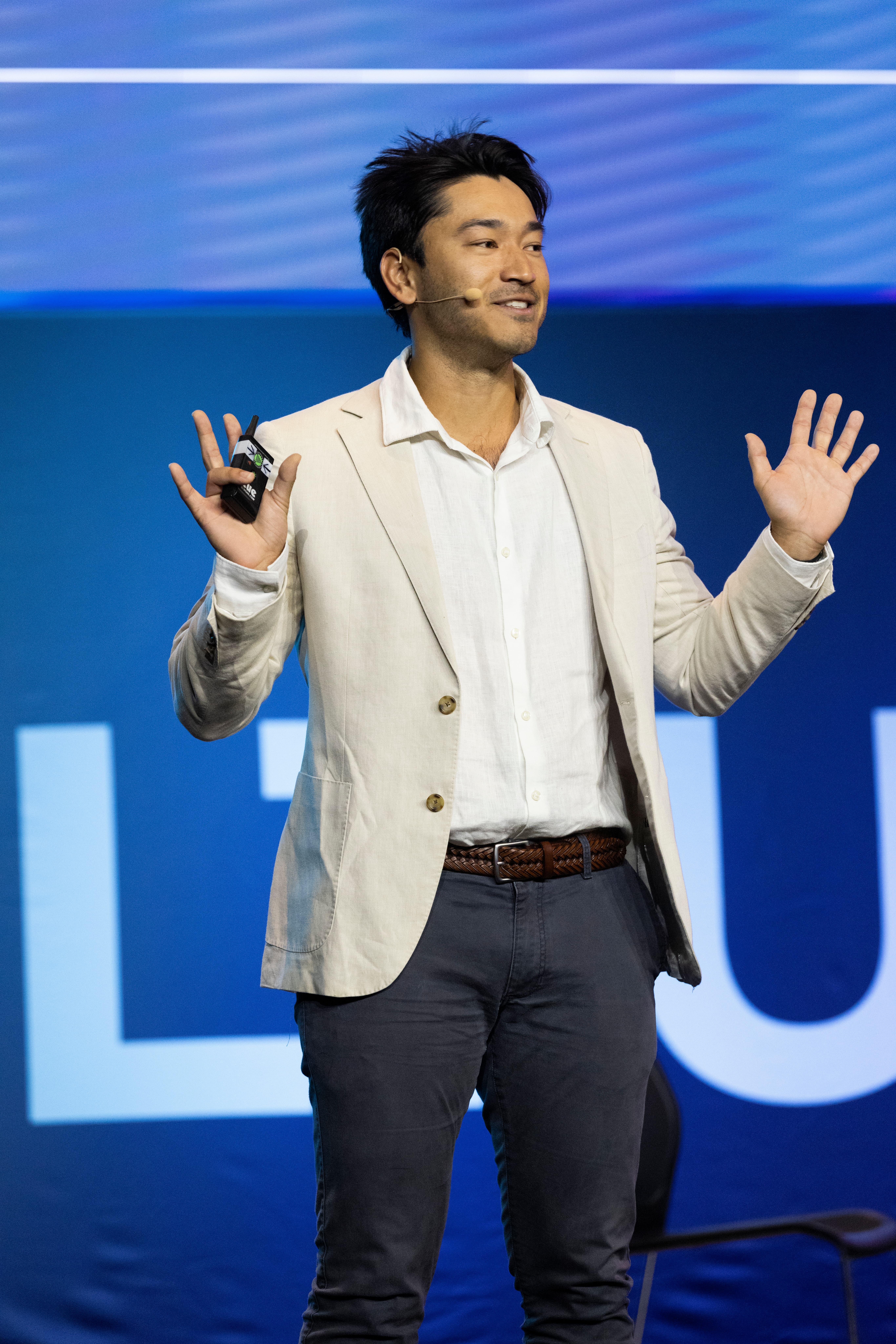
For 13 years I've stood in front of leaders — from Fortune 1000 executives to first-time managers, across every stage of leadership and every corner of the world. As a Senior Harvard Leadership Facilitator and keynote speaker, delivering 1,600+ workshops across four continents.
And across all of it, I kept seeing the same gap. Leaders who were capable, driven, and genuinely impressive. But operating without the one thing that would make all of it click.
Their radar was switched off.
The best leaders I've encountered weren't just self-aware. They were metacognitive. They thought about their thinking which enabled them to be more intentional — not just about what they did, but how and why they did it. And that distinction turned out to be everything.
This course is the distillation of the most useful tools, frameworks, and thinking. All grounded in work with leaders at every level, and rooted in cognitive science rather than opinion.
Most leadership development teaches you what to do. Nobody teaches you how to think about how you're doing it. That's the gap this course was built to close.
Kirun is a world-class facilitator. He has this unique ability to make complex topics practical and accessible. So much so, that you feel motivated (and confident enough) to try it.— Alison, Paramount
This cohort runs for four weeks with leaders ready to close the gap between where they are and who they're capable of becoming. The application takes two minutes. Let's amplify your leadership impact.